Latest Trends In Mobile Game Deveopment
Explore the latest trends in mobile game development, including AR integration, cloud gaming, AI, advanced graphics, and monetization strategies shaping modern mobile games.
The mobile gaming industry has evolved from simple casual games into a multi-billion-dollar global ecosystem. With advances in mobile hardware, faster internet connectivity, and powerful game engines, mobile games today deliver immersive experiences that were once limited to consoles and PCs. As competition grows, game developers and businesses must stay updated with the latest trends in mobile game development to remain relevant and profitable.
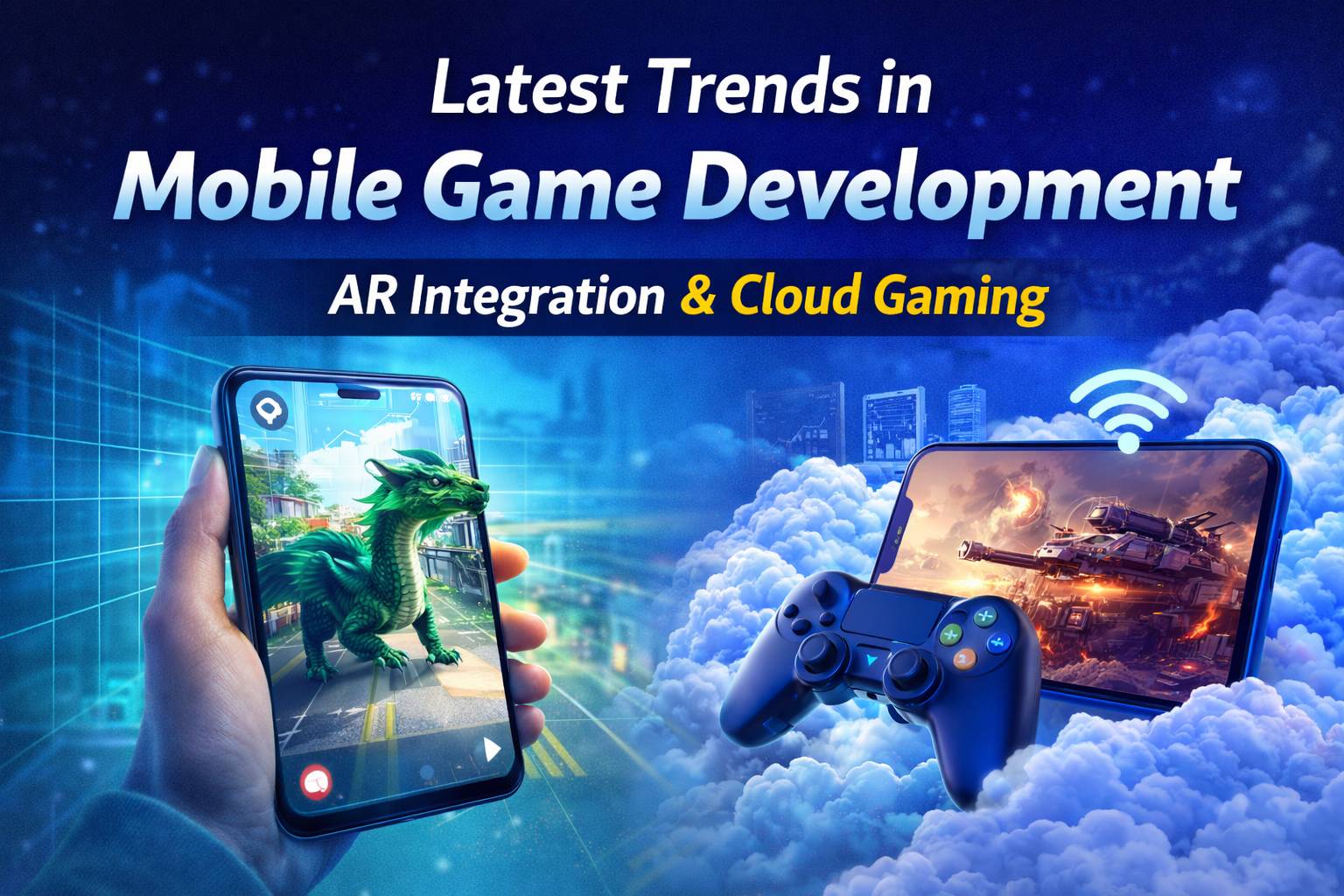
Two of the most impactful trends shaping the future of mobile gaming are Augmented Reality (AR) integration and cloud gaming. Alongside these, improvements in graphics, artificial intelligence, and monetization models are redefining how mobile games are built and experienced.
Growth of the Mobile Game Development Industry
Mobile gaming continues to dominate the global gaming market due to its accessibility and expanding smartphone user base. Players expect high-quality graphics, smooth performance, and engaging gameplay across devices. This rising demand has pushed developers to adopt new technologies that enhance realism, scalability, and user engagement.
Game studios and businesses investing in mobile game development today focus not only on entertainment but also on long-term retention, community building, and monetization strategies.
Augmented Reality Integration in Mobile Games
Augmented Reality has transformed how users interact with mobile games by blending digital elements with the real world. AR-powered games use a device’s camera, sensors, and GPS to create immersive, location-based experiences.
How AR Is Changing Mobile Gaming
AR integration allows players to interact with virtual characters and objects in their physical environment. This creates a deeper sense of immersion and encourages real-world movement and exploration. AR games are particularly effective in increasing user engagement and session time.
Popular Use Cases of AR in Mobile Games
- Location-based games that encourage outdoor exploration
- Interactive puzzles using real-world surfaces
- Multiplayer AR experiences for social interaction
- Educational and simulation-based AR games
Benefits of AR in Mobile Game Development
- Higher player engagement and retention
- Unique gameplay experiences that stand out in the market
- Strong potential for social sharing and virality
- Opportunities for brand collaborations and sponsorships
As AR frameworks and mobile hardware continue to improve, AR integration is becoming more accessible even for small and mid-sized game studios.
Cloud Gaming on Mobile Platforms
Cloud gaming is another major trend reshaping the mobile gaming landscape. Instead of relying on a device’s hardware, cloud gaming allows games to be streamed directly from powerful remote servers.
What Is Cloud Gaming?
In cloud gaming, the game runs on a remote server, and the player’s device only streams the video output while sending control inputs back to the server. This eliminates the need for high-end mobile hardware.
Impact of Cloud Gaming on Mobile Games
Cloud gaming enables:
- Console-quality graphics on standard smartphones
- Reduced device storage usage
- Faster access to games without large downloads
- Cross-platform gaming experiences
Advantages for Developers and Businesses
For developers, cloud gaming reduces hardware limitations and allows them to focus on high-quality game design. Businesses can reach a wider audience since users no longer need powerful devices to enjoy advanced games.
Advanced Graphics and Game Engines
Modern game engines such as Unity and Unreal Engine are playing a key role in driving innovation in mobile game development. These engines support realistic lighting, physics, and animations optimized for mobile devices.
Key advancements include:
- High-definition textures and shaders
- Real-time rendering improvements
- Better performance optimization for low-end devices
These advancements allow developers to deliver visually rich games without compromising performance.
Artificial Intelligence in Mobile Games
AI is increasingly used to improve gameplay mechanics and personalization. From smarter non-player characters to adaptive difficulty levels, AI helps create more engaging and dynamic gaming experiences.
AI-powered features include:
- Intelligent enemy behavior
- Personalized gameplay experiences
- Player behavior analysis for retention improvement
- Automated testing and bug detection
New Monetization Models in Mobile Gaming
Monetization strategies have evolved beyond simple in-app purchases. Developers now use a mix of models to maximize revenue while maintaining a positive user experience.
Popular monetization trends include:
- Free-to-play with optional in-app purchases
- Subscription-based gaming models
- Reward-based advertising
- Seasonal content and battle passes
Balancing monetization with user satisfaction is critical for long-term success.
The Role of 5G in Mobile Game Development
The rollout of 5G networks is accelerating the adoption of AR and cloud gaming. Faster speeds and lower latency improve real-time multiplayer experiences and make high-quality game streaming more reliable on mobile devices.
With 5G, developers can design games that rely on real-time data, multiplayer interaction, and immersive environments without performance limitations.
Challenges in Adopting New Mobile Game Development Trends
While these trends offer exciting opportunities, they also present challenges:
- Higher development costs
- Need for specialized skills and expertise
- Network dependency for cloud-based games
- Device compatibility and optimization
Partnering with an experienced mobile game development company helps businesses overcome these challenges effectively.
Future of Mobile Game Development
The future of mobile gaming lies in immersive, connected, and scalable experiences. AR, cloud gaming, AI, and advanced graphics will continue to converge, creating games that are more interactive and accessible than ever before.
Businesses and startups investing in mobile game development today must align with these trends to build competitive, future-ready gaming products.
Conclusion
Mobile game development is entering an exciting phase driven by AR integration and cloud gaming technologies. These trends are redefining how games are designed, delivered, and experienced on mobile devices. By adopting modern tools and staying ahead of industry trends, developers and businesses can create innovative mobile games that engage users and scale globally.
For companies looking to build high-quality mobile games, staying informed about these trends is not optional—it is essential for long-term success.
By Vikas Kumar • 8 months ago
Category: Mobile Development